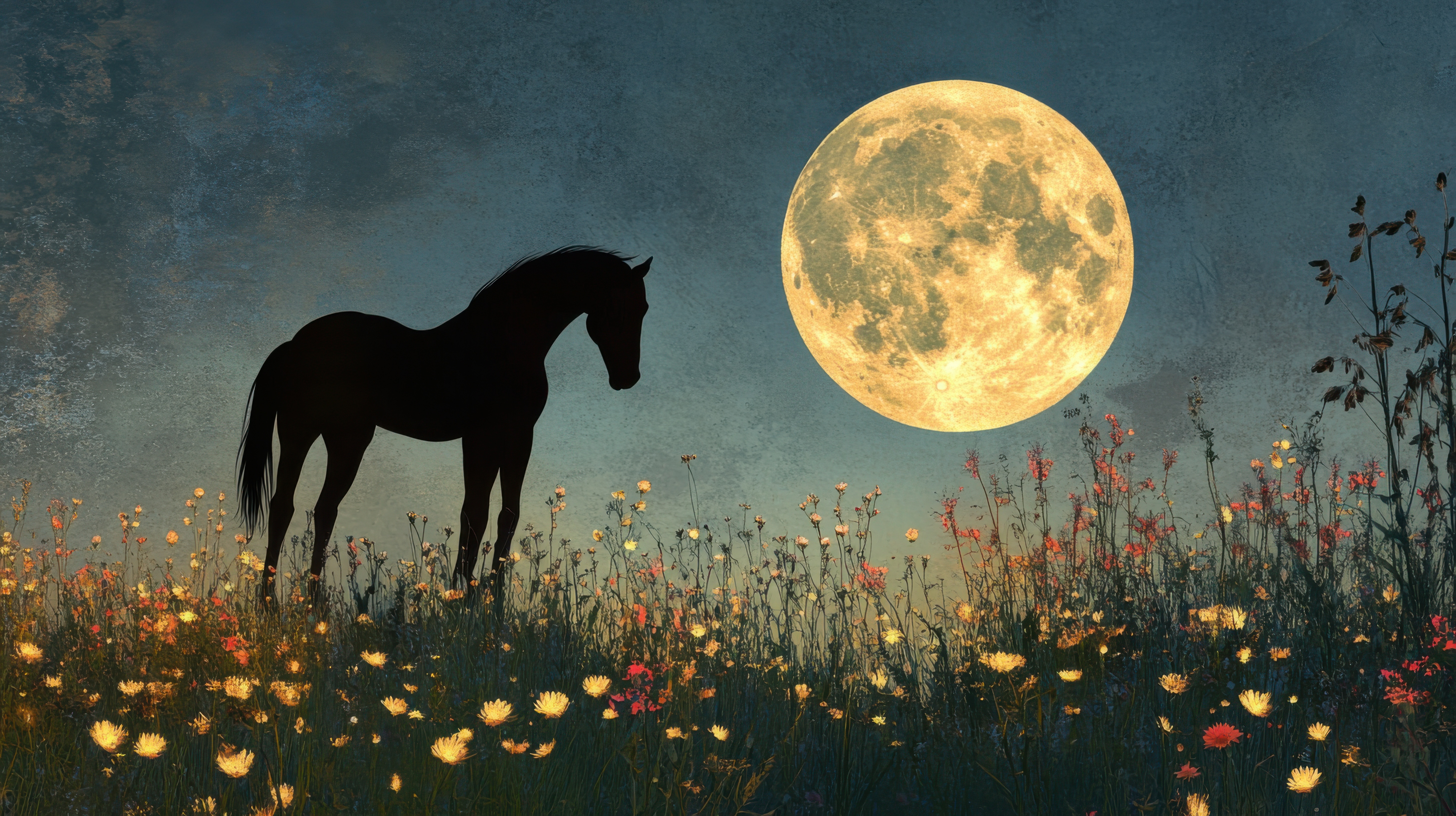
2026 brought renewed attention to the Moon when, in April, Artemis II successfully carried a crew of three Americans and one Canadian on a historic flyby around the Moon's far side. The success of the mission has fueled fresh interest in future lunar exploration.
With the Moon top of mind, we revisit the historic practice of gardening and/or planting by the moon. The premise is that the Moon's gravitational pull affects not only the ebb and flow of ocean tides but also lakes, streams, pools, ponds, groundwater, and even sap flow in stems and roots of plants.
As the Earth faces and opposed the Moon each day, the Moon's gravitational pull causes two daily high tides. And the lesser gravitational pull when the Moon is no longer straight above or below but off to the side creates the ebb tides. These regional effects are scientifically established.
More broadly, the Moon’s 28-day cycle around the earth also impacts the tides. The highest high tides, called “spring tides” typically occur when the Moon is aligned with both the Sun and the Earth. This includes the new moon - when the Moon is between the Earth and Sun, and the full moon - when the Earth is between the Sun and the Moon.
Conversely, the weakest tides called "neap tides" typically occur each month when the Moon is at right angles to the Earth relative to the sun, halfway between new moon and full moon, and vice versa. Occurance of "neap tides" and "spring tides" in relation to the Moon's gravitational pull is also scientifically established.
Of course the Earth's gravitational pull is much stronger than the Moon's. All densities of matter are held to the Earth by its gravitational pull. But some believe that water's lower density relative to land mass allows the Moon to affect -- if ever so slightly -- not just oceans, but water systems throughout the Earth.
The practice of "planting by the moon" involves planting during both the waxing moon and the waning moon cycles. The Moon is waxing as it moves from new moon to full moon, and it is waning as it moves from full moon to new moon. The full moon and the new moon, in and of themselves, are not considered ideal times for planting or harvesting. Both the full moon and the new moon are pivotal, transitional times and not a time for action.
The premise is that the full moon is the time when the elements of earth become most engaged with the water within the earth, creating the greatest amount of moisture activity within the molecules of soil. Therefore planting while moving toward, or, in turn, away from this climactic full moon event is ideal. This premise is not scientifically established but advocates are convinced that this approach produces results.
The first quarter of the waxing moon is considered best for planting plants that produce yields above ground, with seeds outside of the fruit. These plants include grasses, grains, leafy vegetables, broccoli and cabbage. The second quarter of the waxing moon is believed to support planting crops that yield fruit above ground but produce seeds inside the fruit. These crops include beans and peas, most fruits, squash and tomatoes.
Conversely, practitioners plant root crops such as potatoes, carrots, onions, and bulbs uring the first quarter of the waning moon. The beginning of the second quarter of the waning moon is considered the best time to harvest fruits and crops. It is also considered to be the time for pruning and weeding, with the idea growth is less likely to regenerate. The premise is that during the waning moon, the gravitational pull of the Moon is gradually becoming less, resulting in soil conditions are believed to be become less active and relatively drier.
Of course many other factors such as weather and crop rotation practices affect soil conditions. To isolate the Moon's gravitational effects in order to scientifically validate the practice would be challenging. Instead, advocates rely on the historical depth of this long standing tradition.
The practice of planting by the moon may go back to some of the most ancient agricultural societies. The Sumerians who populated the fertile valley between the Tigris and Euphrates Rivers 4000+ years ago are thought to have had a thriving agricultural industry. Cuneiform texts found in archaeological ruins have been interpreted to suggest this culture considered lunar cycles in their planting techniques. In 1949, noted Sumerologist, Samuel Noah Kramer found a clay tablet at the site of Nippur from roughly 1600 BC. Kramer's writings about the discovery referred to the tablet as the “Sumerian Farmer’s Almanac.”
In the early 20th Century, Austrian-born Rudolf Steiner developed a complex system for agriculture generally known as “biodynamic farming.” The system is used today as a method of sustainable farming practice thought to maximize yields and soil fertility, taking into account phases of the moon, along with a myriad of other factors.
In the days before information about everything was readily available online, farmers and gardeners used an "almanac" to find phases of the moon and other statistics such as weather forecasts and tide tables. The “Old Farmer’s Almanac” was first published in 1792, and is the oldest continuously published periodical in North America. Its weather forecasts are based on a secret forecasting formula developed two centuries ago that is still used today. (See their website, www.Almanac.com for moon phases and much more.)
If the gravitational pull of the Moon affects not just oceans and tides but all water systems on Earth, then how does it affect us? Some sources say our body weight is 60% water. Folklore suggests there are distinct lunar cycles best for the planting our own “seeds” - our projects, plans, and endeavors - and other lunar cycles best for harvesting the results. This is a question for another time.
Linda Boston Franke - RC Editor |